
The first sign is usually the sound. You scuff through a drift of leaves under a tree you have been visiting since you were eight, and there is almost nothing — a couple of pale, undersized shells, one split conker, and a lot of litter. Word travels fast between playgrounds and parks. This is not a vintage year.
Poor conker crops are normal. Horse chestnuts do not produce the same amount every autumn, and a thin year is usually the result of several ordinary things stacking up rather than one disaster. Knowing which is which helps you plan your season — and stops you blaming the tree.
What actually decides a crop
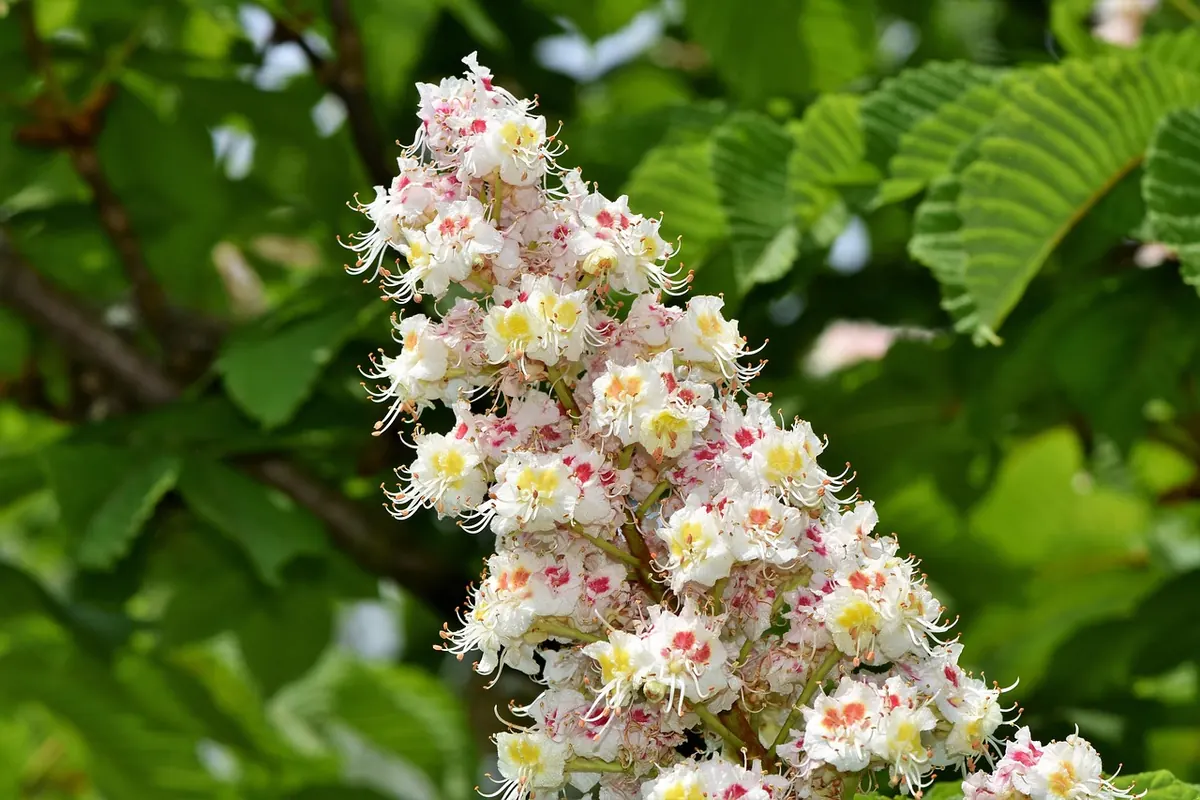
The season is decided months before you see the first spiky case. A horse chestnut flowers in late spring, and those upright white "candles" are the whole year's gamble.
Frost is the biggest single risk. A clear, cold night in late April or May can kill flowers or young nuts before they set, leaving the tree with nothing to develop. Wet, cold, windy weather at flowering time is nearly as bad, because horse chestnuts rely on insects — mostly bees — to move pollen between flowers. Rain keeps pollinators grounded and washes pollen off.
Then comes summer. Conkers are mostly water while they grow, and a long dry spell in July and August leaves a tree short of what it needs to fill them out. Trees on thin, free-draining ground, on paving, or with compacted roots suffer first. A tree that made a huge crop last year is also more likely to take this year off; heavy and light years often alternate. That pattern is normal, not a sign of decline.
The tree's own troubles
Horse chestnuts in Britain and Ireland have had a rough few decades, and two problems show up in the quality of the crop rather than the size of the tree.
- Leaf miner. The tiny moth whose larvae tunnel inside the leaves leaves brown blotches across the canopy by late summer. Heavy damage means less green leaf area, and less green leaf area means less sugar going into next year's buds and this year's conkers.
- Bleeding canker. A bacterial infection that produces dark, sticky patches on the trunk and can kill branches or whole trees over time. It is not something a passer-by can cure, and it is one more reason to treat obviously sick trees gently.
Add the general pressures of life in a town — root compaction, drought, salt, mowing right up to the trunk — and it is easy to see why some trees are struggling while others a few streets away are loaded.
What a thin crop means for players
Fewer conkers changes the game more than you might expect. When supply is short, every decent conker becomes valuable, and the season shifts from collecting to trading, hoarding and protecting.
You will notice four things:
- Smaller ammunition. What is out there tends to be smaller, lighter and less symmetrical, which means more misses and more string-snapping hits.
- Harder hunting. The easy spots — the pavement under the school gate, the tarmac by the car park — get stripped in a day.
- More disputes. Scarce conkers mean more arguments about whose is whose, and more inventive claims about how a conker was hardened.
- Shorter seasons. Once the good ones break, there is no easy replacement. A single loss can end a run.
Where to look when the pickings are thin
If your usual tree has failed, change your search rather than your expectations. A few reliable habits:
- Follow the wind. After a windy night, go the next morning, before the sweepers and the school run get there.
- Search out to the "drip line" — the edge of the canopy — and a few metres beyond. Good conkers roll.
- Check the boring places: under benches, in gutters and drains, against kerbs, in the long grass at the base of hedges, behind bins.
- Read the trees, not just the ground. If one tree is bare and another still has candles and green cases, work the second one.
- Ask around. Local knowledge beats any map: a churchyard, a school field, a quiet corner of a retail park.
And keep the rule that keeps the whole thing going: take some, leave some. Stripping a tree bare is bad manners, bad for wildlife and bad for next year.
Getting more out of fewer conkers
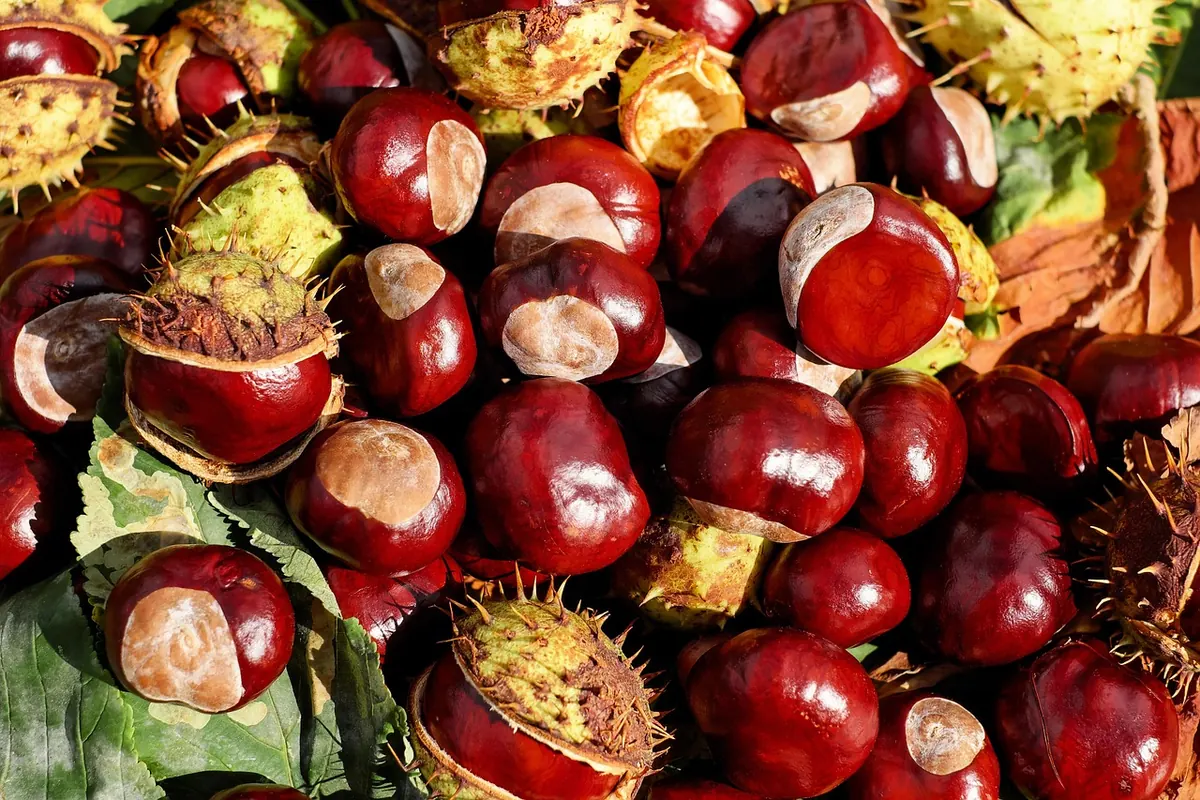
A short season rewards preparation. Pick conkers when they are firm and glossy, and reject anything with a soft patch, a hole, or fine dust around it — that is a weevil's exit hole, and it will crumble.
Wash them in cool water, pat them dry, and let them cure somewhere airy and out of direct sun for a few days. Stored in a cool, dry tin they harden gradually and can keep for months; kept in a warm, damp bag they go mouldy. The old tricks are mostly a bad idea. Baking is a fire risk and a waste of a good conker, and varnish makes a shell that cracks instead of flexing. Half the point is the argument about the rules anyway.
Play to the conditions
With smaller stock, adjust rather than grumble. Shorter strings give more control, a steady swing beats a big looping smash, and best-of-five games make luck matter less. Trim loose shell from the base but never cut into the conker itself. Carry a spare. Keep it dry, but don't wrap it in plastic.
This weekend, and next year
Go out anyway. Walk the trees you know, work the edges, and be willing to come home with three conkers instead of thirty. Note which trees are loaded and which are bare — that is worth more than a full bag next October. If a tree is clearly sick, with sticky dark patches on the trunk or a brown canopy by August, leave it alone; if it is on your land, ask a qualified arboriculturist rather than trying to treat it yourself.
A thin crop is not the end of conkers, and it is not even unusual. It is a tree managing a year it did not enjoy, and next spring's weather will decide the next crop. In the meantime, learn which trees quietly came through — and look after the ones that are struggling.
Photo: Ralphs_Fotos / Pixabay