
Every October the same small tragedy plays out beside the school gate. A conker is threaded with real pride, hung up, swung at once, and shatters. The owner stares at the two halves on the ground and blames bad luck. It is almost never luck. Most broken conkers were doomed ten minutes before the first hit by a choice nobody thought about.
Almost every failure traces back to one of ten mistakes, and all ten are cheap to fix. Pick better, drill straighter, tie stronger, and a plain-looking conker will still be in your pocket in December.
Picking Conkers Too Early
A green conker feels dense and looks handsome next to the brown ones. It is also the most common reason a game ends in a sad little thud. Green means unripe: the shell is full of moisture, and as it dries over the following weeks the nut shrinks, the shape distorts, and the hole you drilled so carefully stops gripping the string. Your conker starts sliding, then swinging loose, then it is gone.
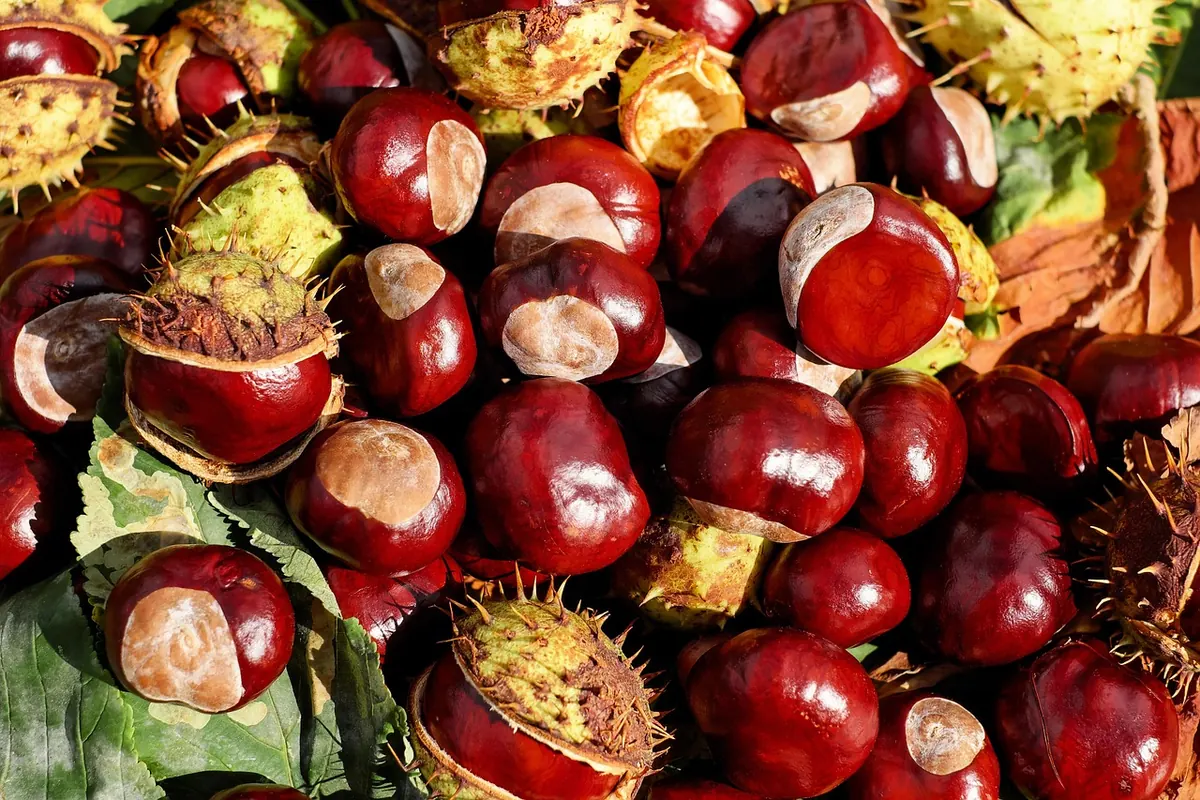
Wait for the ones already on the ground. A ripe horse chestnut has dropped out of its spiky case by itself, and it looks the part: deep even brown, glossy, no dull or wrinkled patches. It should feel heavy for its size — a light conker is usually dried out or hollow. Tap two together and you want a clink rather than a thud.
Then check for stowaways. Hold the conker up to the light and look for a small round hole. That is where a weevil grub left, and the inside is a hollow shell that will crush on the first hit. Reject anything cracked, chipped or soft. A quick checklist for the pile at home:
- Deep, even brown with a shine
- Heavy for its size, with no rattle when shaken
- No pinprick holes, cracks or soft patches
- Clean of husk and dried mud before it goes into storage
Horse chestnuts are not edible. They contain aescin, which makes people and animals ill if eaten. Wash your hands after a collecting session, keep them away from dogs, and store them out of reach of small children. If you think someone or something has eaten one, speak to a doctor or a vet.
Bad Drilling Ruins Good Conkers
Drilling is where promising conkers quietly die. Three faults cover most of it.
The hole goes in off-centre
Drill through the middle, starting at the top and aiming for the pale scar — the "eye" — on the far side. An off-centre hole makes the conker hang at an angle, so it swings unpredictably and strikes with the side of its shell instead of the strongest point. Mark the centre front and back with a pencil dot before you commit.
The bit is the wrong size
Use a bit a fraction narrower than your cord. The hole should grip the string, not swallow it. Too wide and the conker rattles up and down the cord; too narrow and the shell splits as you push the string through.
Nothing is holding the conker
Never drill a conker in your fingers — one slip and the bit goes into your hand. Grip it in a padded vice, or between two offcuts of wood with a groove cut in each. Run the drill slowly, ease in, and back the bit out gently. Blow the dust clear rather than poking a wire through. If the shell hairline-cracks at the exit, that conker is a practice piece.
- Mark the centre, front and back.
- Clamp it in something padded, never in your hand.
- Drill slowly with a bit just narrower than your cord.
- Check the hole is straight by looking through it against a window.
Weak String, Slipping Knots and the Wrong Drop
It is odd how much effort goes into the conker and how little into the string holding it. Thin garden twine frays, shoelaces stretch and go slack, and anything elastic lasts exactly one swing. Use braided nylon cord, thin paracord, or a doubled length of decent twine — and give it a hard tug before you trust it.
Knots matter as much. A single granny knot will slide. Tie a tight double knot or a figure-eight, and add a small stopper bead or a second knot if your cord is smooth. Leave the conker just enough room to swing freely without sliding along the string.
Length is the third trap. Somewhere near 25cm from your fingers to the conker — about a forearm — is comfortable. Longer and it tangles and whips about; shorter and you have no control and no give. Wind the spare cord around your hand, and never loop it around a finger during a game.
The Hardening Myths That Backfire
Baking, roasting, microwaving, freezing, soaking in vinegar, painting with varnish or nail polish, burying in a tin until next year: conker folklore is rich and most of it makes things worse. Heat drives out moisture and leaves the shell brittle, so a baked conker tends to flake apart. Vinegar softens the shell over time and smells dreadful. Varnish traps damp inside. The freezer splits it.
The dull method works. Leave your conkers in a cool, dry, airy spot for a few weeks, turning them now and then, and store them in paper bags or a cardboard box. Plastic holds damp and grows mould. A conker dried slowly over a month is noticeably tougher than one drilled the day it fell, and last year's dry conker is a respectable weapon.
Rushing the Game Itself
Half the rows in a conker match come from rules nobody agreed on beforehand. Sett
Photo: Couleur / Pixabay